
Do You Need Getting Ready Photos and Video on Your Wedding Day?
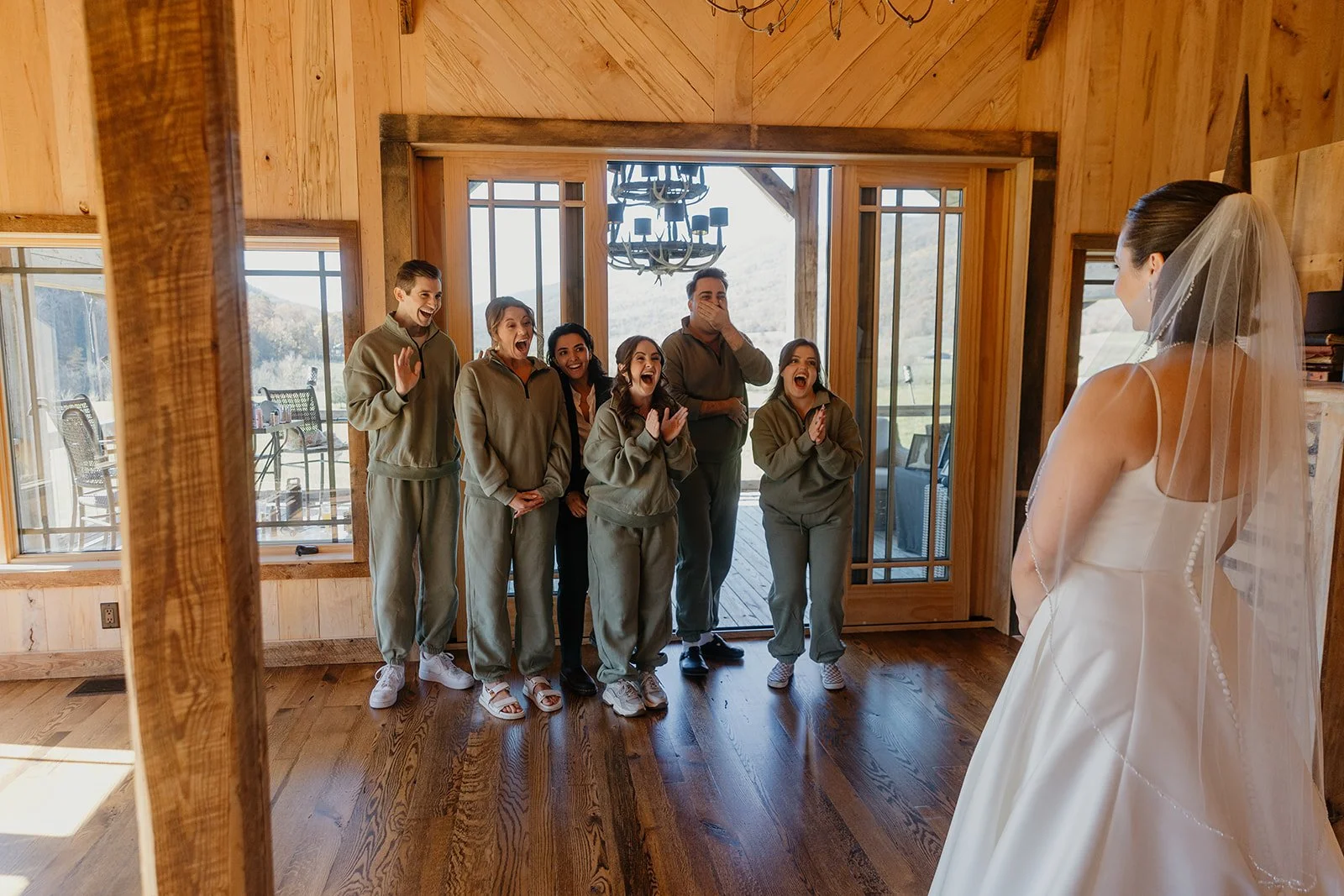
When couples build their wedding photography timeline, getting ready is sometimes the first thing they consider cutting.
I understand why.
If you have eight hours of coverage, you might think:
Why would I spend an hour of it taking pictures of makeup?
But that's not really what getting-ready coverage is about.
Some of my favorite moments happen before the ceremony even begins.
Your mom seeing you completely ready for the first time.
Your dad walking into the room.
Your best friend trying to figure out how to tie someone's tie.
Your wedding party laughing about something that has absolutely nothing to do with the wedding.
Reading a letter from your partner.
Your grandmother seeing you in your dress.
Opening a gift.
The nervous energy right before everyone leaves for the ceremony.
Those aren't filler photographs.
They're part of the story.
So do you absolutely need getting-ready photography and videography?
No.
But before you remove it from your timeline, understand what you'd actually be giving up.
Getting-Ready Coverage Isn't About Photographing Hair and Makeup for Two Hours
This is probably the biggest misconception.
I don't need hundreds of photographs of mascara being applied.
Usually, I want to arrive toward the end of the getting-ready process.
Most of the major hair and makeup work is already complete.
Then I can capture a little of those final touches before moving into the more meaningful parts of the morning.
That might include:
Wedding details
Dress
Rings
Invitations
Final makeup touches
Wedding party
Getting dressed
Jewelry
Parent interactions
Gifts
Letters
Candid moments
That's what creates the beginning of your wedding story.
The Wedding Doesn't Start at the Ceremony
Your ceremony may officially begin at 5:00 PM.
Your wedding story started hours earlier.
People were already together.
Your closest friends were getting ready.
Parents were emotional.
Someone was running late.
Music was playing.
Everyone was anticipating what was about to happen.
That's part of what the day felt like.
And that's what documentary-style wedding photography is designed to preserve.
Some of the Most Meaningful Moments Aren't Planned
This is why I value getting-ready coverage.
You can schedule:
2:30 — Get dressed
But you can't schedule:
2:42 — Mom suddenly gets emotional when she sees you.
Those moments simply happen.
The more breathing room we have in the timeline, the more opportunities I have to document them naturally.
Getting Ready Is Especially Valuable for Wedding Video
Photography can preserve someone's expression.
Video can preserve what they said.
That's a major difference.
Imagine your mom helps you get dressed and says something quietly.
Or your dad walks into the room and immediately starts crying.
Or your wedding party starts telling stories while everyone gets ready.
Video preserves:
Voices
Laughter
Movement
Conversations
Atmosphere
Those pieces can become incredibly useful when building the wedding film.
Audio From the Morning Can Help Tell Your Wedding Story
A wedding film doesn't have to begin with music and pretty shots of a venue.
Sometimes the best storytelling comes from actual voices.
That could be:
A letter
Private vows
A conversation
A toast from the night before
Something a parent says while you're getting ready
Those words can become part of the film later.
That's why I think about videography as storytelling rather than simply recording events.
How Much Getting-Ready Coverage Do You Need?
For many weddings, I don't need several hours.
Usually, 45–90 minutes before you're completely dressed gives us plenty of opportunity.
That can allow time for:
Details
Final hair and makeup
Candid interactions
Getting dressed
Parent reveal
Wedding-party photographs
Letters or gifts
Then we transition into the next part of the day.
Don't Get Dressed Before Your Photographer Arrives
This sounds simple, but it matters.
If you want photographs of:
Your mom helping with the dress
Bridesmaids helping with buttons
Putting on jewelry
Jacket going on
Tie being adjusted
Cufflinks
Final touches
wait until photography coverage begins.
You can be completely ready otherwise.
Then once we're there, the final getting-dressed process can happen naturally.
You Don't Need to Fake Getting Ready
I don't want to arrive after you're completely dressed and ask:
“Can we pretend to put the dress on again?”
If possible, I'd rather photograph the actual moment.
That's part of why timeline communication before the wedding matters.
Everyone knows when photography begins.
We don't have to recreate something that already happened.
What Getting-Ready Details Should You Have Ready?
If detail photographs matter to you, gather everything together before the photographer arrives.
For one partner, that might include:
Dress
Shoes
Rings
Invitation suite
Jewelry
Perfume
Veil
Vow book
Family heirlooms
For the other:
Suit
Shoes
Tie
Watch
Cufflinks
Cologne
Vow book
Letters or gifts
Put everything in one place.
That way, I'm not spending 20 minutes searching for a ring box.
Do You Need Flat-Lay Photographs?
No.
They're completely optional.
Some couples love detailed flat lays with:
Invitations
Rings
Florals
Jewelry
Others couldn't care less.
Both are completely fine.
Tell your photographer what matters to you.
If you'd rather have 20 additional candid photographs of your friends than an elaborate flat lay, I'd rather know that.
Your gallery should reflect your priorities.
Your Getting-Ready Room Matters
One of the easiest ways to improve getting-ready photographs is choosing a room with good natural light.
Look for:
Large windows
Neutral walls
Open space
Clean backgrounds
That doesn't mean you need a luxury hotel suite.
Good light can make a simple room photograph beautifully.
Window Light Is Your Friend
If there's a big window, I will probably use it.
It gives us soft, directional light that works beautifully for:
Makeup
Getting dressed
Portraits
Parent interactions
Details
And unlike a ceiling full of mixed artificial lights, window light usually gives us cleaner skin tones.
Turn Off Ugly Overhead Lights When Possible
Hotel rooms can have a mixture of:
Daylight
Warm lamps
Cool LEDs
Bathroom lights
all hitting you simultaneously.
That can create strange color combinations.
If we have enough window light, I'll often simplify the room.
Sometimes turning off a few lamps makes the photograph significantly better.
You Don't Need a Perfectly Clean Room
Your friends are getting ready for a wedding.
There's going to be stuff everywhere.
That's normal.
I don't expect the room to look like a magazine.
But having one relatively clean area near the best light helps tremendously.
Move:
Suitcases
Plastic bags
Water bottles
Food containers
away from that section.
Then everyone can continue living normally everywhere else.
Matching Robes Aren't Required
Please don't buy matching robes because you think your photographer requires them.
If you love them, great.
Wear them.
If you don't, skip them.
The same applies to elaborate getting-ready outfits.
I care much more about:
Interaction
Emotion
Light
People
than whether everyone is wearing matching pajamas.
Consider What You'll Wear Before the Dress
There is one practical consideration.
If your hair and makeup are finished, avoid clothing that has to be pulled tightly over your head.
A button-down shirt, robe, or loose-neck top can make changing easier.
That's a practical decision.
Not a photography requirement.
Should Both Partners Have Getting-Ready Photos?
Absolutely, if both sides matter to you.
Getting-ready coverage shouldn't mean:
90 minutes with one partner and three photographs of the other putting on a jacket.
There can be meaningful moments on both sides.
For example:
Parents helping
Wedding party hanging out
Tying ties
Opening gifts
Reading letters
Putting on boutonnieres
Toasting together
Those deserve to be documented too.
This Is Where a Second Photographer Can Help
If both partners are getting ready simultaneously in different locations, a second photographer can be extremely useful.
One photographer stays with one side.
The second covers the other.
That prevents us from spending valuable coverage time driving back and forth.
It's one of the situations where adding a second photographer can make a meaningful difference.
The Same Applies to Videography
If both partners are getting ready in completely different locations at the same time, one filmmaker can't physically be in both places.
That's where:
A second videographer
Staggered getting-ready schedules
Nearby locations
can help.
Again, your wedding-day logistics should influence your coverage decisions.
Getting Ready at the Same Venue Makes Everything Easier
If your venue has separate suites for both partners, that's ideal.
Your photo and video team can move between spaces quickly.
That gives us more time documenting people and less time sitting in a car.
It also makes the transition into:
First look
Wedding party portraits
Ceremony
much smoother.
Separate Hotels Require More Timeline Padding
This is especially important for weddings in Nashville and downtown Chattanooga.
If one partner is at one hotel and the other is across town, don't look only at the driving time.
We need time for:
Elevators
Parking
Loading equipment
Traffic
Walking
Finding the room
A “10-minute drive” can easily consume 30 minutes of the wedding timeline.
Nashville Weddings Need Extra Transportation Awareness
Nashville traffic can make a multi-location getting-ready schedule more complicated.
If both partners are staying in different downtown hotels and the ceremony is somewhere else, transportation needs to be part of the photography timeline from the beginning.
I would much rather add a buffer than spend the wedding morning watching the clock.
Chattanooga Weddings Have Their Own Logistics
Chattanooga is easier to navigate in many situations, but mountain venues create their own travel considerations.
Getting ready downtown and then driving to a venue around:
Lookout Mountain
Signal Mountain
Ooltewah
Georgetown
still takes time.
Again:
Don't build the timeline around the fastest possible Google Maps estimate.
Smoky Mountain Weddings Can Require Even More Buffer
For Gatlinburg and Sevierville weddings, mountain roads, cabin locations, tourist traffic, and unfamiliar properties can all add time.
That's why getting ready at the wedding property can be especially convenient for Smoky Mountain weddings.
Less transportation means more actual coverage.
Should You Do a First Look With Your Parents?
This can be incredibly meaningful.
You don't have to stage an elaborate reveal.
Sometimes it's as simple as:
Get completely dressed.
Have your mom or dad walk into the room.
Then let whatever happens happen.
Don't worry about where to put your hands.
Don't worry about looking at the camera.
Just experience it.
I'll photograph it.
What About a Wedding-Party Reveal?
Same answer.
If that sounds fun to you, do it.
If it sounds forced, don't.
I don't want your wedding morning to become:
Reveal #1
Reveal #2
Reveal #3
Reveal #4
because Pinterest told you that's how weddings work.
Choose the moments that actually mean something to you.
Letters and Gifts Can Work Beautifully
If you're exchanging letters, consider reading them while photography and video are present.
Especially video.
Hearing your partner's words while seeing footage from the morning can become an emotional part of the final film.
But again:
Don't write letters because your videographer wants content.
Do it because you actually want to say something to each other.
Private Vows Are Another Option
If you're uncomfortable reading personal vows during the ceremony, you can exchange them privately earlier in the day.
That can happen:
During the first look
Immediately afterward
Somewhere quiet before the ceremony
For video, this gives us meaningful audio.
For photography, it gives us genuine reactions.
For you, it gives you a private moment together.
Don't Over-Schedule the Morning
This is probably my biggest advice.
The morning shouldn't be:
12:00 details
12:10 robes
12:20 champagne
12:30 makeup
12:40 dress
12:50 reveal
1:00 letters
1:10 wedding party
That's exhausting.
Leave room for life to happen.
Some of my favorite photographs happen in the spaces between scheduled events.
Candid Photography Needs Time to Breathe
You can't schedule candid moments.
You create an environment where they have a chance to happen.
If we're constantly rushing everyone:
“Okay, next photo!”
the morning begins to feel like a production.
I'd rather give you some direction when necessary and then let you interact with the people you actually invited to the wedding.
Getting-Ready Coverage Helps the Final Gallery Feel Complete
Imagine opening your wedding album.
Page one:
Ceremony.
Something is missing.
Getting-ready photographs give the story an introduction.
We see:
Location
Details
People arriving
Anticipation
Final preparations
Then the story naturally moves toward the ceremony.
That's why I value that part of the day.
It's Even More Important for Wedding Films
Films benefit from beginnings.
An establishing shot.
The venue.
The dress.
Someone opening a letter.
Friends laughing.
A parent helping with final touches.
Then the music builds.
We move toward the first look or ceremony.
That creates a story rather than simply:
Here's footage from a wedding.
When Would I Skip Getting-Ready Coverage?
There are situations where it makes sense.
For example:
You're planning a very small wedding.
Photography coverage is intentionally short.
You don't care about details.
You're already getting dressed before coverage begins.
Your biggest priorities are:
Ceremony
Family
Couple portraits
Reception
In that case, I'd rather allocate your limited coverage toward the things you actually value.
There's no rule saying every wedding gallery needs getting-ready photographs.
What If We Only Have Six Hours of Coverage?
Then we prioritize.
Maybe photography begins shortly before you're completely dressed.
We capture:
Final touches
A few details
Parent interaction
and then move immediately into the first look or ceremony.
You don't necessarily need to eliminate getting-ready coverage entirely.
We can compress it.
What If We Have Eight to Ten Hours?
That's where we have much more flexibility.
We can document:
Details
Both partners
Getting dressed
Letters
Parent reveals
First look
Portraits
Ceremony
Reception
without every part of the day feeling compressed.
That's why I generally like building the timeline before deciding exactly how much coverage you need.
Don't Choose Coverage Hours Based Only on the Package
This is backwards:
“The package has eight hours, so let's make the wedding fit eight hours.”
Instead:
Build the wedding-day timeline.
Identify what you want photographed and filmed.
Then determine the appropriate coverage.
Sometimes that's six hours.
Sometimes eight.
Sometimes ten.
The wedding should determine the package.
Not the other way around.
What I Actually Look for During Getting Ready
I'm not standing around waiting for everyone to look at me.
I'm watching.
I'm looking for:
Reactions
Touch
Laughter
Nervousness
Parents
Friendships
Small details
Movement
Quiet moments
Those photographs give your gallery personality.
Because they're about your people.
You Don't Have to Perform for the Camera
This is especially important during the morning.
If you're laughing with your friends, keep laughing.
If your mom is helping you, look at her.
If your dad walks into the room, react to him.
You don't need to stop and look at me every time the camera appears.
The less aware you are of me, the more naturally I can document what the morning actually felt like.
My Approach to Getting-Ready Photography and Video
If I'm photographing or filming the beginning of your wedding day, my priorities are pretty simple.
Capture the Environment
Where were you?
Capture the People
Who was there?
Preserve the Details
What did you intentionally choose?
Watch for Relationships
What happened naturally?
Don't Manufacture the Morning
Give direction when necessary.
Then get out of the way.
Prepare for What Comes Next
Getting ready should flow naturally into the first look, portraits, or ceremony.
That's the goal.
Frequently Asked Questions About Getting-Ready Wedding Photos
How long do getting-ready wedding photos take?
For many weddings, approximately 45–90 minutes of pre-ceremony coverage is enough to capture final hair and makeup, details, getting dressed, and candid interactions. More time may be useful if both partners are being photographed in separate locations.
Should hair and makeup be finished before the photographer arrives?
Ideally, most of the process should be complete. I usually prefer photographing some final touches rather than spending a large portion of your coverage documenting the entire hair and makeup appointment.
Should I get dressed before my photographer arrives?
If getting-dressed photographs matter to you, wait until your photographer arrives before putting on the dress or completing the final stages of getting ready.
Do grooms need getting-ready photos?
They don't need them, but those moments can be just as meaningful. Parents, friends, letters, gifts, ties, jackets, and candid interactions can all contribute to the complete story.
Is getting-ready footage important for wedding videography?
It can be extremely useful because it gives the wedding film an introduction and can capture conversations, letters, laughter, movement, and interactions that happen before the ceremony.
Do we need a second photographer if we're getting ready separately?
Not always, but a second photographer can be especially valuable when both partners are getting ready simultaneously in different locations.
Can Spencer Purcell Films photograph and film the getting-ready portion of our wedding?
Yes. Spencer Purcell Films offers wedding photography and videography throughout Chattanooga, Nashville, Gatlinburg, Sevierville, the Smoky Mountains, and across Tennessee, with coverage built around the specific timeline and priorities of each wedding.
So, Are Getting-Ready Wedding Photos Worth It?
For most full wedding days, I think they are.
Not because you need 75 photographs of makeup.
You don't.
They're valuable because the morning contains part of the story that won't happen again.
Your friends together.
Your parents.
The anticipation.
The nerves.
The jokes.
The letters.
The quiet moments.
And then suddenly, you're walking toward the ceremony.
At Spencer Purcell Films, I approach wedding photography and videography as a complete story rather than a collection of staged moments.
That means documenting the big things.
But it also means paying attention before the “big things” even begin.
I provide wedding photography and videography throughout Chattanooga, Nashville, Gatlinburg, Sevierville, the Smoky Mountains, and across Tennessee.
We'll build your coverage around:
Getting ready
First look
Ceremony
Family photographs
Couple portraits
Reception
Sunset
Photography priorities
Videography priorities
so the day feels natural rather than rushed.
Planning your wedding photography and videography timeline?
📅 Check your wedding date availability.
📖 Request complete photography, videography, and combined photo + video collections and pricing.
📞 Schedule a complimentary consultation so we can build coverage around what you actually want preserved.
Popular spring and fall wedding dates can book 12–18 months in advance, so once your venue and date are secured, I recommend reserving your photography and videography team early.