
Wedding Ceremony Photography Restrictions: What Couples Should Ask Before the Wedding
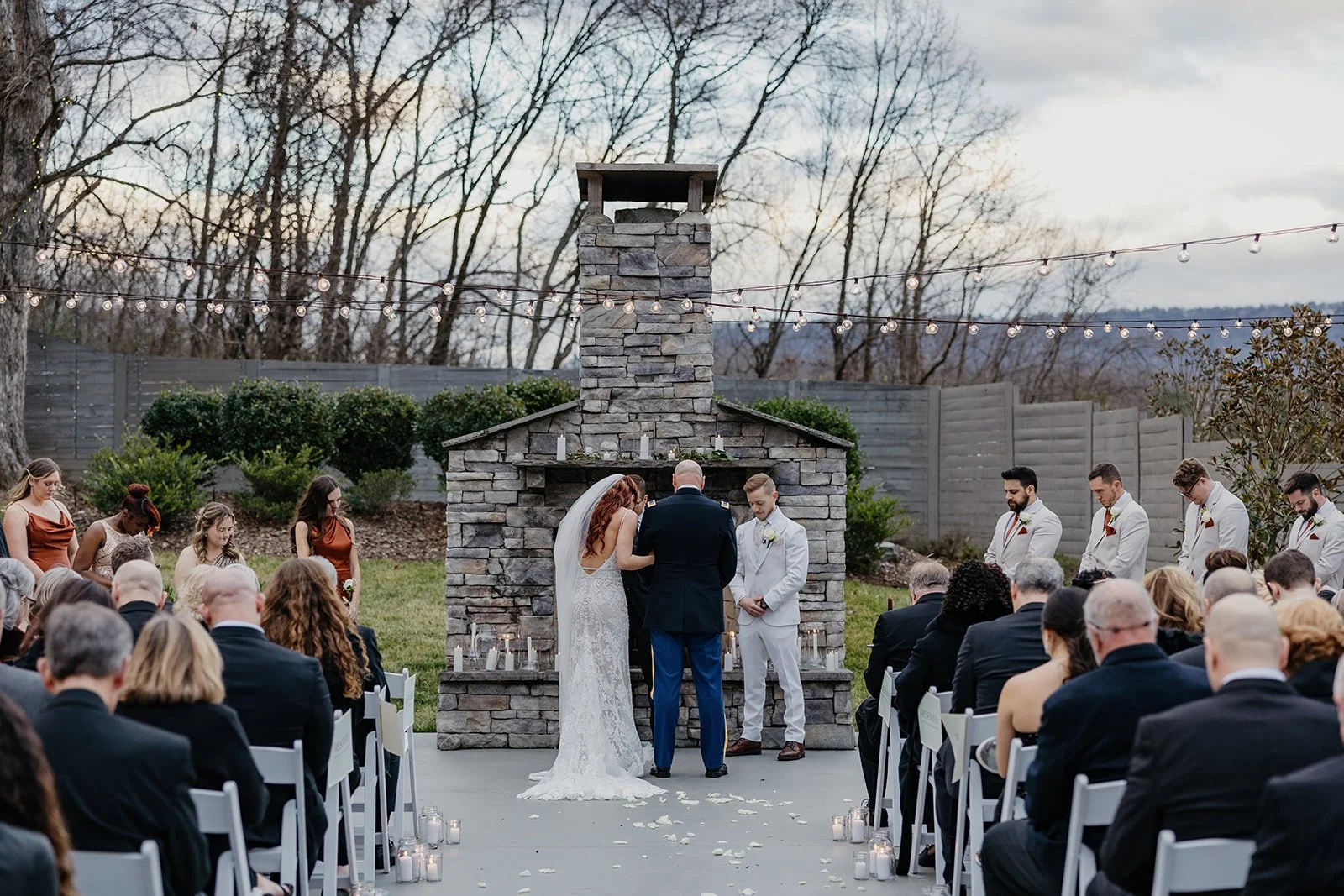
Your wedding ceremony is one of the few parts of the wedding day that can't be repeated.
The processional happens once.
Your partner sees you once.
The vows happen once.
The rings happen once.
The first kiss happens once.
That's why one of the questions I wish more couples would ask their ceremony venue before the wedding is surprisingly simple:
“Are there any photography or videography restrictions during our ceremony?”
Most couples understandably don't think about this.
You tour a beautiful church.
You choose your ceremony location.
You sign the contract.
Months later, your photographer arrives and discovers:
No photographers past the last row.
Or:
No movement during the ceremony.
Or:
No cameras near the altar.
Or:
No flash.
Or occasionally:
Photography is only permitted from one designated location.
None of those rules automatically means you'll have bad wedding photographs.
Experienced photographers work around restrictions all the time.
But I'd much rather know about them before your ceremony begins.
Here's what couples should ask.
Why Do Churches Restrict Wedding Photography?
Usually, it's not because they dislike photographers.
Wedding ceremonies—especially religious ceremonies—aren't intended to become photoshoots.
A photographer constantly walking around the altar would be distracting.
A videographer setting up equipment directly in front of guests could interfere with the ceremony.
Flash firing every few seconds can take attention away from what's happening.
So many churches establish rules designed to protect the ceremony.
And I completely understand that.
My job is to document what's happening without becoming part of what's happening.
Every Ceremony Location Can Have Different Rules
Never assume the rules from another wedding apply to yours.
I've seen ceremony locations where photographers have significant freedom.
I've also seen churches where movement is much more restricted.
Rules can involve:
Where photographers can stand
Where videographers can stand
Whether cameras can be near the altar
Whether the center aisle can be used
Whether balconies can be accessed
Whether flash is permitted
Whether photographers can move during prayers
Where tripods can be placed
Whether video lights are permitted
Whether equipment can be set up before guests arrive
That's why I recommend asking directly.
The Most Important Question: Where Can the Photographer Stand?
This can have the biggest effect on your photographs.
Imagine your photographer is allowed to stand:
Anywhere behind the final row of guests.
That means we can photograph the ceremony.
But it changes our options.
We may not be able to get:
Close reactions
Side angles
Parent reactions
Certain processional angles
Close photographs during vows
That doesn't mean the ceremony can't be documented.
It means we need to prepare for those limitations.
Ask Whether Photographers Can Use the Center Aisle
The center aisle is particularly valuable during:
Processional
Recessional
First kiss
But some churches don't want photographers standing there.
That's understandable.
The photographer shouldn't be blocking guests' view.
The important thing is knowing the rule beforehand.
If I know I can't enter the aisle, I can choose another position before the processional begins.
Ask Whether Photographers Can Move During the Ceremony
Some churches allow photographers to move discreetly.
Others ask that photographers choose a location and remain there.
This changes how I approach coverage.
If movement is allowed, one photographer may be able to capture:
Front
Side
Rear
Guest reactions
throughout the ceremony.
If movement isn't allowed, we need to think much more carefully about positioning before everything begins.
This Is Where a Second Photographer Can Be Extremely Valuable
Imagine your church says:
Once the ceremony begins, photographers cannot move.
With one photographer, I have to choose one position.
With two photographers, we may be able to establish:
Photographer One: Front/side perspective.
Photographer Two: Rear perspective.
Now we have two viewpoints without anyone moving during the ceremony.
That's one of the situations where a second photographer provides genuine value rather than simply giving you more photographs.
Videography Makes Positioning Even More Important
Video needs something photography doesn't:
Continuous coverage.
A photographer can take a photograph and move.
A video camera may need to remain focused on the ceremony for:
20 minutes
30 minutes
An hour
depending on the ceremony.
That's why videographers often use multiple cameras.
Why Wedding Videographers Use Multiple Cameras
Imagine your ceremony has three video cameras.
One might capture:
Wide ceremony view
Another:
One partner
Another:
The other partner
Now the filmmaker has options.
If a guest stands in front of one camera, we have another.
If someone walks through an angle, we have another.
And during editing, we can move between perspectives.
Multiple cameras aren't only about making the film more cinematic.
They're also about protecting moments that happen once.
Ask Where Video Tripods Are Allowed
This is something couples rarely think about.
Some churches have designated areas for tripods.
Others don't allow them in certain aisles.
Your videographer needs to know.
A tripod shouldn't:
Block guests
Create a tripping hazard
Obstruct the aisle
Distract from the ceremony
The earlier we understand the space, the better we can position everything.
What If Flash Isn't Allowed?
This is extremely common.
And usually completely fine.
Many photographers don't use flash during ceremonies anyway because it can be distracting.
Instead, we rely on:
Available light
Professional camera bodies
Fast lenses
Appropriate camera settings
The challenge comes when the church is extremely dark.
That's when experience with low-light photography becomes important.
A Dark Church Isn't Automatically a Problem
Some churches are intentionally dim.
They may have:
Dark wood
Limited windows
Stained glass
High ceilings
Warm interior lighting
To your eyes, the space can look beautiful.
The camera needs more help.
That's where your photographer needs to understand how to work in low light without relying on flash.
Ask About Video Lighting Too
Continuous video lights can be more distracting than photography flash because they remain on.
For most ceremonies, I don't want a bright video light pointed at you anyway.
Instead, professional cameras and lenses allow us to work with the existing environment.
But if your videographer planned to use lighting, the venue's rules matter.
Again:
Ask beforehand.
What About Outdoor Ceremonies?
Outdoor ceremonies usually have fewer movement restrictions.
But they create different challenges.
Now we're thinking about:
Sun direction
Guests
Wind
Audio
Ceremony layout
Photographer sightlines
You might technically have complete freedom while still having a difficult photography setup.
Your Ceremony Arch Placement Matters
This is especially important outdoors.
Sometimes the ceremony is positioned entirely around the background.
I understand why.
The mountain view is beautiful.
The river is beautiful.
The field is beautiful.
But we should also think about:
Where will the sun be?
If one partner is in full sun and the other is in deep shade, photography becomes much more difficult.
Ceremony Photography Starts Before Anyone Walks Down the Aisle
I don't want to arrive at the ceremony two minutes before it begins.
Before guests are seated, I want to understand:
Light
Layout
Aisle
Altar
Restrictions
Camera positions
For video, we also need time for:
Cameras
Audio
Tripods
Recorders
Preparation matters.
Professional Ceremony Audio Is Critical for Wedding Video
Beautiful ceremony footage isn't enough.
I want to hear:
Your vows
Officiant
Readings
Ring exchange
That's why ceremony videography often involves multiple audio sources.
Depending on the wedding, that may include recording:
Officiant
Partner
Venue sound system
Musicians
with backups whenever possible.
Ask Whether Your Church Has a Sound System
If you're hiring a videographer, this is useful information.
Does the officiant use a microphone?
Do you have microphones for vows?
Are readings amplified?
Is there a soundboard?
The answers help us prepare the appropriate audio setup.
Don't Assume the DJ Handles Ceremony Audio
Sometimes they do.
Sometimes the venue handles it.
Sometimes the church has its own system.
Sometimes nobody does.
Find out before the wedding.
Your guests need to hear the ceremony.
And if you're investing in a wedding film, you'll want to hear it later too.
Ask About Restrictions Before You Sign the Venue Contract
Ideally, ask while you're still touring.
You don't need to reject a beautiful church because photographers can't move freely.
But you deserve to understand what you're agreeing to.
Ask:
“Do you have photography or videography rules we can review?”
If they have written guidelines, get a copy.
Then send them to your photographer and videographer.
Don't Wait Until the Rehearsal
The rehearsal is better than finding out on the wedding day.
But earlier is even better.
If I know about restrictions weeks or months beforehand, I can prepare.
Maybe we recommend:
A second photographer
An additional video camera
Different lenses
Different positioning
Preparation gives us options.
Your Photographer Should Respect the Rules
This is important.
If a church says:
Don't enter the altar area
I shouldn't enter the altar area because I think the photograph is worth it.
That's not professional.
Your wedding photographer is representing you.
I want the officiant and venue staff to feel like the photography team respected the ceremony.
“Getting the Shot” Isn't an Excuse to Be Distracting
There's a difference between being proactive and being intrusive.
I don't want your guests remembering:
“That photographer was everywhere.”
I want them remembering:
your ceremony.
Good wedding photography often means knowing when not to move.
What About Guests Taking Photos?
This is where an unplugged ceremony can help.
Even if your professional photographer has complete freedom, guests can unintentionally affect photographs.
Someone may:
Step into the aisle
Hold a phone overhead
Use an iPad
Lean into the aisle
Stand during the processional
They're trying to capture something they care about.
I understand that.
But sometimes they don't realize they're blocking the photographer you hired to document the moment.
An Unplugged Ceremony Doesn't Have to Be Aggressive
You don't need a giant sign saying:
NO PHONES.
Your officiant can simply say:
“The couple invites you to be fully present during the ceremony and has asked that phones and cameras remain put away.”
Simple.
Friendly.
Clear.
Is an Unplugged Ceremony Necessary?
No.
It's your wedding.
If you love the idea of guests taking photographs, that's completely fine.
Just understand the tradeoff.
The more phones in the aisle, the greater the chance they'll appear in your professional photographs.
Ask About Balcony Access
Some churches have balconies.
From a photography and video perspective, they can be extremely useful.
A balcony can provide:
Wide ceremony photographs
Overhead perspectives
Additional video angle
Full view of the architecture
But don't assume it's available.
Ask.
Beautiful Architecture Deserves to Be Documented
If you've chosen a church because you love the architecture, I want photographs that show it.
Not every ceremony photograph needs to be a tight shot of the two of you.
Wide photographs establish:
Where you got married.
Those images become especially meaningful when the ceremony space has history or personal significance.
But the Building Shouldn't Become More Important Than the People
The architecture establishes the environment.
Then we return to:
Expressions
Hands
Parents
Wedding party
Guests
Vows
That's what tells the emotional story.
Ceremony Length Changes Our Approach
A ten-minute ceremony moves quickly.
We may have very little time to change positions.
A traditional religious ceremony lasting an hour gives us more time.
But it may also have stricter rules.
Your photographer and videographer should understand what kind of ceremony you're planning.
Tell Us About Important Traditions
Don't assume your photographer knows every tradition happening during your ceremony.
Tell us.
Maybe you're:
Lighting a unity candle
Breaking glass
Taking communion
Performing a cultural ritual
Having a family blessing
Exchanging personal gifts
If I know it's happening, I can prepare for it.
This Is Especially Important for Video
A filmmaker needs to know where something will happen.
If a special ceremony takes place on the opposite side of the altar from our main camera, that's important.
A quick conversation beforehand can prevent a major moment from being blocked.
What About First-Kiss Rules?
Yes, these exist.
Some officiants have very specific preferences about where the photographer can stand during the first kiss.
Some churches don't want photographers near the altar.
Again:
We can work with that.
I just want to know.
Consider Holding the First Kiss for a Second
I'm not asking you to stage anything.
But this is one piece of practical advice that can help.
Don't:
kiss-peck-run.
Enjoy it.
A slightly longer natural first kiss gives both photography and video a better opportunity to capture the moment.
You just got married.
You're allowed to take an extra second.
The Recessional Is One of My Favorite Ceremony Moments
The pressure disappears.
You're married.
Everyone cheers.
You walk back down the aisle.
Expressions are completely different from the processional.
This is another reason keeping the aisle clear can be valuable.
I want to capture:
Your reaction
Guests
Movement
Celebration
without ten phones blocking the frame.
Family Photos May Also Be Restricted
Some churches limit how long couples can remain inside after the ceremony.
This is another important question.
Ask:
How long do we have in the sanctuary after the ceremony?
If the answer is:
15 minutes
I need to know that before you give me a list of 35 family combinations.
Churches Sometimes Have Another Event After Yours
This happens.
Your ceremony ends at 3:00.
Another service begins later.
The church needs:
Guests out
Decorations removed
Space reset
That's completely reasonable.
But it affects your photography timeline.
We Can Move Family Photos Somewhere Else
If the sanctuary has strict timing, we don't necessarily need to do every photograph there.
We might photograph:
Immediate family at the altar
then move extended-family photographs elsewhere.
Again:
Knowing the restriction gives us options.
Chattanooga Church Weddings
Chattanooga has everything from traditional churches to modern ceremony spaces and mountain venues.
The rules can vary tremendously.
If you're planning a traditional church wedding, I recommend asking for the photography guidelines early and sending them to your photographer.
That allows us to plan around the actual ceremony instead of making assumptions.
Nashville Church Weddings
Nashville weddings can also involve multiple locations:
Hotel getting ready
Church ceremony
Separate reception venue
That already creates a more complex photography and videography timeline.
Ceremony restrictions become another piece we need to account for.
The earlier we know them, the easier it is to build the day correctly.
What Should You Ask Your Ceremony Venue?
Before the wedding, I recommend asking:
Are there restrictions on where photographers can stand?
Can photographers move during the ceremony?
Is the center aisle accessible?
Can photographers approach the altar?
Is flash photography permitted?
Are video cameras and tripods allowed?
Where can video cameras be positioned?
Is there balcony access?
Are there restrictions on video lighting?
Does the ceremony have a sound system?
Can the videographer access the soundboard?
How early can photo/video arrive to set up?
How long can we remain after the ceremony?
Are there any rules regarding guest photography?
Are there written photography/videography guidelines?
If they give you a document:
Send it to your photographer and videographer.
That's one of the easiest things you can do.
What If Your Ceremony Has Very Strict Restrictions?
Don't panic.
Restrictions don't automatically mean poor photographs or video.
They simply change the approach.
We may use:
Longer lenses
Additional cameras
A second photographer
Multiple video angles
Different positioning
The key is preparation.
What If We Find Out on the Wedding Day?
We'll adapt.
That's part of photographing weddings.
Things change.
Rules appear.
Weather changes.
Timelines move.
An experienced photographer should be able to solve problems without making them your problem.
But if we can solve something three months before the wedding instead of three minutes before the processional?
I'd rather do that.
Your Ceremony Shouldn't Feel Like a Production
This is ultimately the point.
I want beautiful photographs.
I want an incredible wedding film.
But I don't want the ceremony to revolve around cameras.
You should be thinking about:
Your partner.
Your vows.
Your family.
What you're promising each other.
Not:
“Where is the photographer standing?”
We'll figure that out.
Frequently Asked Questions About Wedding Ceremony Photography Restrictions
Do churches allow wedding photography?
Most do, but individual churches may have specific rules about photographer movement, flash, altar access, aisles, and equipment. Ask your ceremony location for its policies before the wedding.
Can churches ban flash photography during weddings?
Yes. No-flash rules are common, particularly during religious ceremonies. Experienced wedding photographers should be comfortable working with available light when flash isn't permitted.
Can a church tell the photographer where to stand?
Yes. Some churches designate specific areas for photographers and may restrict movement once the ceremony begins.
What if our photographer can't move during the ceremony?
The photographer can choose the strongest available position beforehand. Depending on the venue, having a second photographer in another permitted location may provide additional perspectives.
Are wedding videographers usually allowed in churches?
Often, but rules vary. Churches may restrict tripod placement, camera locations, movement, lighting, and access to certain areas.
Should we ask about photography rules before booking our church?
Ideally, yes. Understanding the rules early gives you and your photography/video team plenty of time to plan.
Should we have an unplugged ceremony?
It's optional, but an unplugged ceremony can reduce the chance of guests blocking professional photographs with phones or stepping into the aisle during important moments.
Does Spencer Purcell Films photograph and film church weddings?
Yes. Spencer Purcell Films provides wedding photography and videography throughout Chattanooga, Nashville, the Smoky Mountains, and across Tennessee and can plan ceremony coverage around the specific rules and layout of your venue.
Your Ceremony Happens Once. Preparation Helps Us Preserve It.
The ceremony isn't the part of the wedding where I want to improvise unnecessarily.
I want to know:
Where we can stand
Where we can move
What the lighting looks like
Where video cameras can go
How we're recording audio
What traditions are happening
How long we have afterward
before you ever walk down the aisle.
Then when the ceremony begins, the cameras become background noise.
You don't have to think about them.
At Spencer Purcell Films, I provide wedding photography and videography throughout Chattanooga, Nashville, Gatlinburg, Sevierville, the Smoky Mountains, and across Tennessee.
My goal isn't simply to create beautiful photographs and films.
It's to create them while respecting the wedding that's actually happening in front of us.
Planning your wedding ceremony?
📅 Check your wedding date availability.
📖 Request complete photography, videography, and combined photo + video collections and pricing.
📞 Schedule a complimentary consultation so we can talk through your ceremony location, timeline, photography, videography, and any venue restrictions.
Popular spring and fall wedding dates can book 12–18 months in advance, so once your ceremony location and date are secured, I recommend reserving your photography and videography team early.