
Should You Take Wedding Photos Before or After the Ceremony?
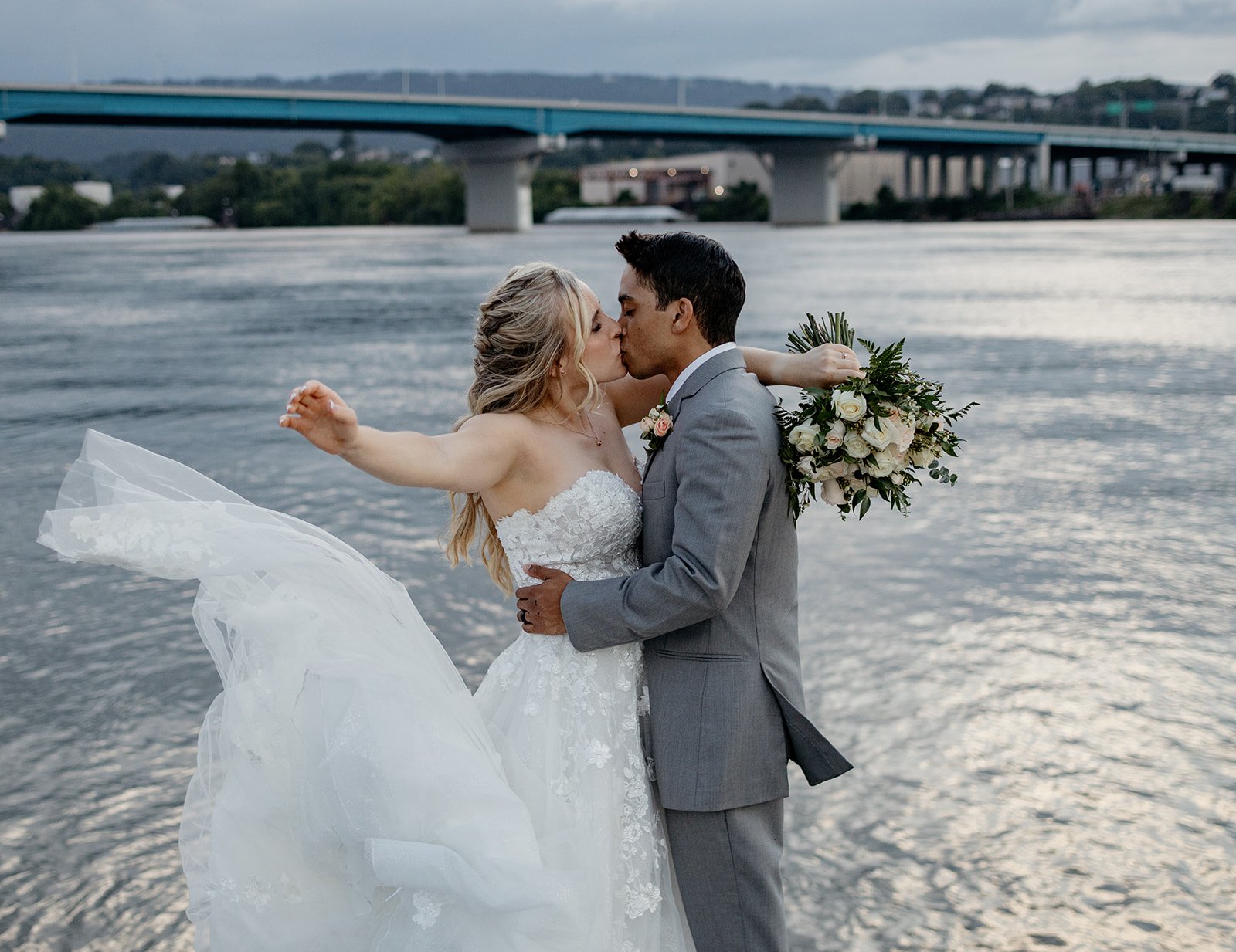
One of the biggest decisions when building your wedding photography timeline is:
When are we actually going to take all of our photos?
Before the ceremony?
After?
Some before and some after?
For most weddings, my answer is:
Some of both.
I usually don't want to cram every photograph into one giant block.
Instead, I like dividing photography throughout the day so you get the photographs you want without feeling like your wedding turned into an all-day photoshoot.
Exactly how we divide things depends largely on one decision:
Are you doing a first look?
Let's walk through both options.
Option 1: Taking Most Wedding Photos Before the Ceremony
If you're doing a first look, we have considerably more flexibility.
A typical order might look like:
Getting ready
↓
First look
↓
Couple portraits
↓
Wedding party
↓
Immediate family
↓
Ceremony
↓
A few remaining family photos
↓
Just-married portraits
↓
Reception
This can make the period between the ceremony and reception much more relaxed.
What Photos Can You Take Before the Ceremony?
If you've already seen each other, we can potentially complete almost every formal photograph beforehand.
That includes:
Couple portraits
Full wedding party
Each side of the wedding party
Couple with wedding party
Immediate family
Individual portraits
Then after the ceremony, we may only need a handful of photographs.
The Biggest Advantage: Less Pressure After the Ceremony
Without a first look, cocktail hour can become a race.
We need to photograph:
Family
Wedding party
Couple portraits
while your guests are already celebrating.
With a first look, much of that work is finished.
After the ceremony, you might only need 15–30 minutes before joining everyone.
For couples who want to attend cocktail hour, that's a major advantage.
You Can Actually Spend Time With Your Guests
This is one of the strongest arguments for doing photographs beforehand.
Your guests traveled to celebrate with you.
If you've already completed:
Wedding party
Immediate family
Main couple portraits
you may be able to spend significantly more of cocktail hour with them.
That's valuable.
Especially if your reception schedule is already packed.
A First Look Doesn't Mean Every Photo Happens Before the Ceremony
This is important.
Even if we take the main portraits beforehand, I still like photographing you afterward.
Why?
Because something has changed.
You're married.
The energy is different.
Those first few minutes after the ceremony can create some of my favorite photographs.
Post-Ceremony Photos Feel Different
Before the ceremony, there may still be nerves.
Afterward?
There's usually relief.
Excitement.
You're laughing.
Everyone just cheered for you.
You don't need to choose between:
Before-ceremony portraits
and:
After-ceremony portraits.
We can do both—just in shorter windows.
What If You Don't Want a First Look?
That's completely fine.
I never want couples to choose a first look simply because their photographer told them they had to.
If you've imagined seeing each other for the first time during the processional, protect that experience.
We'll build the photography timeline around it.
Option 2: Taking Couple Photos After the Ceremony
If you're not doing a first look, the main couple portrait session will happen after the ceremony.
That's traditional.
And it can work beautifully.
The important thing is giving ourselves enough time.
What Can We Still Photograph Before the Ceremony?
Quite a lot.
You don't have to sit around doing nothing because you haven't seen each other.
Before the ceremony, we can photograph:
Partner One
Individual portraits
Their wedding party
Their immediate family
Then:
Partner Two
Individual portraits
Their wedding party
Their immediate family
We simply keep you separated.
This Is One of the Best Ways to Save Time Without a First Look
Let's say we photograph before the ceremony:
One partner + parents
One partner + siblings
One partner + wedding party
and do the same for the other side.
After the ceremony, we don't need to repeat everything.
Now we only need combinations involving both of you together.
That's much more efficient.
Family Photos Can Be Split Before and After the Ceremony
This works extremely well.
Before the ceremony:
Partner A + Partner A's family
Partner B + Partner B's family
After the ceremony:
Couple + Partner A's family
Couple + Partner B's family
Couple + both families
Now the post-ceremony family list becomes much shorter.
Grandparents May Be Better After the Ceremony
There are exceptions.
If grandparents or older family members don't need to arrive extremely early, don't make them.
We can save those photographs for after the ceremony.
The photography timeline should work for the people involved—not simply what's fastest for the photographer.
What About Divorced or Separated Parents?
This is exactly why your photographer should receive family information before the wedding.
We can organize combinations intentionally.
No awkward:
“Okay, everybody's parents together!”
when that's not appropriate.
Tell us beforehand.
Then we can make the process smooth and respectful.
Wedding Party Photos Can Also Be Split
Before the ceremony:
Partner A + their side
Partner B + their side
After:
Entire wedding party together
This can dramatically shorten the post-ceremony portrait window.
How Much Time Do You Need After the Ceremony Without a First Look?
It depends on how much we've already completed.
But if everything still needs to happen afterward, you may need approximately:
20–30 minutes — family
15–20 minutes — wedding party
20–30 minutes — couple portraits
That's potentially around an hour or more once transitions are included.
That's why planning matters.
A 60-Minute Cocktail Hour Isn't Really 60 Minutes
This catches couples off guard.
Suppose your ceremony ends at 5:00.
Cocktail hour is 5:00–6:00.
You might think:
Perfect. We have an hour for photos.
Not exactly.
Guests need to leave.
Family needs to gather.
Someone disappears.
We move to the portrait location.
Then you need to:
Bustle the dress
Freshen up
Line up for introductions
before the reception begins.
Your usable photography window may be considerably shorter than 60 minutes.
Don't Build a Timeline With Zero Margin
If you need 60 minutes of photographs, don't give us exactly 60 minutes between the ceremony and introductions.
That's how weddings start feeling rushed.
Build breathing room.
Something will take longer than expected.
That's normal.
What If We Want to Attend Cocktail Hour?
Then I'd strongly consider moving more photography before the ceremony.
That does not necessarily mean you need a first look.
We can still complete:
Individual portraits
Separate wedding-party photographs
Separate family photographs
beforehand.
Then we reduce what remains afterward.
A First Look Gives You the Most Flexibility
If attending almost all of cocktail hour is a priority, a first look is usually the easiest solution.
We can potentially finish almost every formal portrait before the ceremony.
Then afterward:
Sign the marriage license
Take a few just-married portraits
Maybe photograph one or two family combinations
and go celebrate.
But Don't Choose a First Look Only to Save 30 Minutes
Your experience matters more than efficiency.
If seeing each other during the aisle reveal is deeply important to you, I'd rather give photography more time after the ceremony.
There is no universally “correct” timeline.
The correct timeline supports the wedding experience you want.
When Should You Take Couple Portraits?
Ideally?
More than once.
I like a main portrait session plus one or two shorter windows later.
For example:
Before ceremony: 20–25 minutes
After ceremony: 10 minutes
Sunset: 10 minutes
Now we get different:
Light
Emotion
Backgrounds
Energy
without ever disappearing for an hour.
This Creates a More Varied Wedding Gallery
Think about the difference.
Before the ceremony:
Soft afternoon light.
After:
You're officially married.
At sunset:
Warm evening light.
At night:
Reception lighting.
Those photographs won't feel identical.
That's one reason I prefer several short portrait sessions over one giant one.
When Should You Take Wedding Party Photos?
If possible, I like doing most wedding-party photographs before the ceremony.
Why?
Once the ceremony ends, everyone wants to go to cocktail hour.
I don't blame them.
If we can finish wedding-party photographs earlier, that's one less group of people we need to keep track of afterward.
When Should You Take Family Photos?
This depends on family logistics.
For many weddings, immediately after the ceremony works best because everyone is already together.
But if you're doing a first look, immediate-family photographs before the ceremony can be incredibly efficient.
We can decide based on:
Family size
Mobility
Ceremony location
First look
Timeline
Cocktail hour priorities
Don't Schedule Family Photos Too Early
Here's a common mistake.
Ceremony:
5:00 PM
Family photographs:
2:30 PM
Now you're asking parents and grandparents to be completely dressed and at the venue hours early.
Sometimes that makes sense.
Often it doesn't.
Efficiency for photography shouldn't create unnecessary inconvenience for your family.
When Should You Take Sunset Photos?
Usually during the reception.
And don't worry:
I don't need you for 45 minutes.
When the light looks good, we step outside for approximately 10–15 minutes.
Then you go right back to the party.
Sunset Is Different in Chattanooga
This is especially important for Chattanooga mountain venues.
The official sunset might be:
7:45 PM
But if your venue sits near a ridge, direct sunlight may disappear much earlier.
That's why I plan around the actual venue—not simply the sunset time listed online.
Lookout Mountain Weddings Require Extra Attention
Mountain terrain can dramatically affect light.
One side of a venue may lose sunlight while another still looks beautiful.
If evening portraits matter to you, I want to understand the property and light direction before we build that part of the timeline.
Nashville Weddings Have Different Challenges
Nashville weddings often involve transportation.
Maybe you're:
Getting ready at a hotel.
Having the ceremony at a church.
Taking portraits downtown.
Then going to a reception venue.
Every location change consumes time.
In that situation, deciding which photographs happen before and after the ceremony becomes even more important.
Don't Spend Your Wedding Driving to Photo Locations
A beautiful portrait location 20 minutes away isn't really a 20-minute commitment.
It's:
20 minutes there.
Portraits.
20 minutes back.
Now we've potentially used an hour.
Unless that location is deeply meaningful to you, I'd rather find beautiful photographs where the wedding is already happening.
Smoky Mountain Weddings Benefit From Simpler Timelines
For Gatlinburg and Sevierville weddings, mountain roads and tourist traffic can make location changes unpredictable.
If your venue or cabin already has incredible scenery, use it.
You don't necessarily need to drive somewhere else for portraits just because it's famous.
Your wedding should be the priority.
Weather Can Change the Plan
This is another reason I don't like rigid photography timelines.
Suppose sunset portraits were planned for 7:30.
At 6:45, I see a storm approaching.
The light looks incredible right now.
We might step outside early.
An experienced photographer should be watching conditions throughout the day rather than blindly following a spreadsheet.
Rain Might Change Which Photos Happen Before or After the Ceremony
Maybe it rains before the ceremony and clears afterward.
Great.
We'll adjust.
Maybe the opposite happens.
We'll adjust again.
The timeline gives us structure.
It shouldn't prevent us from taking advantage of better conditions.
What About Wedding Video?
The same general timeline works.
Photography and videography shouldn't require completely separate portrait sessions.
When you're:
Walking
Talking
Interacting
Taking portraits
both teams can work.
That's why communication between photo and video matters.
Your First Look Is Especially Important for Video
A first look isn't only a photography opportunity.
Video captures:
Movement
Voice
Reactions
Laughter
If you're exchanging private vows, it can also give your wedding film some of its most meaningful audio.
Don't Recreate the First Look for Video
This is why photographers and videographers need to coordinate.
I don't want:
Photographer captures first look.
Then:
“Okay, go back around the corner so video can get it.”
The moment already happened.
Both teams should be ready the first time.
Should You Take All Photos Before the Ceremony?
For some couples, yes.
Especially if:
You're doing a first look
Cocktail hour matters to you
Your ceremony ends close to reception introductions
You have a large family list
You have a large wedding party
But I would still usually save a few minutes for photographs afterward.
You're married now.
That deserves to be documented.
Should You Take All Photos After the Ceremony?
You can.
This makes sense if:
You don't want a first look
Your ceremony is early
You have a long cocktail hour
Your portrait list is small
Photography is a major priority
But I would still photograph whatever we can beforehand without you seeing each other.
There's no reason to waste useful time.
My Preferred Approach: Divide the Photography
For most weddings, I like:
Before Ceremony
Details
Getting ready
Individual portraits
First look, if applicable
Wedding party
Some family
Immediately After Ceremony
Remaining family
Full wedding party if needed
Just-married portraits
Evening
Short sunset portrait session
Night
Optional creative portrait
That gives us variety without taking over your wedding.
Example Timeline With a First Look
Let's say your ceremony is at 5:00 PM.
A simplified photography schedule might look like:
1:30 PM — Photography begins / details
2:00 PM — Getting ready
2:45 PM — First look
3:00 PM — Couple portraits
3:25 PM — Wedding party
3:50 PM — Immediate family
4:15 PM — Hide away / ceremony preparation
5:00 PM — Ceremony
5:30 PM — A few remaining family photographs
5:45 PM — Just-married portraits
6:00 PM — Join cocktail hour / reception transition
7:30 PM — Short evening portrait session
This is only an example.
Your actual timeline depends on your venue, ceremony, sunset, family, and priorities.
Example Timeline Without a First Look
Same 5:00 PM ceremony:
1:30 PM — Photography begins / details
2:00 PM — Getting ready
2:45 PM — Partner A portraits
3:05 PM — Partner A + wedding party/family
3:30 PM — Partner B portraits
3:50 PM — Partner B + wedding party/family
4:15 PM — Ceremony preparation
5:00 PM — Ceremony
5:30 PM — Combined family portraits
5:50 PM — Full wedding party
6:05 PM — Couple portraits
6:30 PM — Reception transition
Again:
Not a template you have to copy.
It's simply an example of how photography moves when the couple waits until the aisle to see each other.
Which Option Is Better?
Neither.
They create different wedding-day experiences.
Choose based on what matters to you.
Consider a First Look If:
You want more portraits before the ceremony
You want to attend cocktail hour
You want a more relaxed post-ceremony timeline
You like the idea of seeing each other privately
You want to exchange private vows
Consider Waiting Until the Aisle If:
That reveal is deeply important to you
You love the tradition
You're comfortable doing more portraits afterward
Your timeline has enough space
Photography can work with either decision.
Frequently Asked Questions
Is it better to take wedding pictures before or after the ceremony?
Neither is universally better. Taking more photographs before the ceremony can create a more relaxed cocktail hour, while waiting preserves the traditional aisle reveal. Many couples benefit from dividing photography between both parts of the day.
Can you take wedding pictures before the ceremony without doing a first look?
Yes. Each partner can take individual portraits, photographs with their side of the wedding party, and photographs with their own family while remaining separated.
Should family pictures happen before or after the wedding ceremony?
Both can work. With a first look, immediate-family photographs can often happen beforehand. Without a first look, separate family groups can be photographed before the ceremony and combined groups afterward.
Should wedding-party photos happen before the ceremony?
When possible, I like completing most wedding-party photographs before the ceremony. It reduces the number of people we need to organize during cocktail hour.
How long do wedding photos take after the ceremony?
It depends on what was completed beforehand. If family, wedding-party, and couple portraits all remain, you may need around an hour or more. If most portraits are already complete, the post-ceremony session may only require 15–30 minutes.
Do we have to do a first look to have a relaxed timeline?
No. Good planning can create a relaxed timeline without a first look. We simply use the pre-ceremony period efficiently and give post-ceremony portraits enough time.
Can we still take sunset photos if we do portraits before the ceremony?
Absolutely. I often recommend a short 10–15 minute evening portrait session because the light and atmosphere will look different from earlier photographs.
Your Photography Timeline Should Support Your Wedding—Not Control It
There isn't one correct answer to:
Should we take wedding photos before or after the ceremony?
The better question is:
What kind of wedding-day experience do we want?
If you want a private first look and almost all of cocktail hour with your guests, we'll move more photographs earlier.
If you've dreamed about seeing each other for the first time at the aisle, we'll protect that moment and leave more time afterward.
If family photographs are extremely important, we'll make room for them.
If you care more about candid photographs than dozens of formal combinations, we'll build the day differently.
That's how I approach wedding timelines at Spencer Purcell Films.
I provide wedding photography and videography throughout Chattanooga, Nashville, Gatlinburg, Sevierville, the Smoky Mountains, and across Tennessee.
Instead of forcing every couple into the same timeline, we'll build photography and videography around:
Your ceremony
Your venue
Your family
Your first-look decision
Your wedding party
Your sunset
Your reception
And, most importantly, how you actually want the day to feel.
Planning your wedding photography and videography?
📅 Check your wedding date availability.
📖 Request complete photography, videography, and combined photo + video collections and pricing.
📞 Schedule a complimentary consultation so we can talk through your venue, timeline, first-look decision, and photography priorities.
Popular spring and fall wedding dates can book 12–18 months in advance, so once your venue and date are secured, I recommend reserving your photography and videography team early.